

Key Takeaways
- A Haakaa manual breast pump suits occasional expressing and collecting milk during feeds without batteries or charging.
- An electric pump may be more practical when you need regular pumping sessions while away from your baby.
- A silicone suction pump works differently from a hand-lever pump, so compare how each fits your routine.
- Milk storage, cleaning facilities and charging access matter as much as the pump’s size.
- Try your travel setup at home before relying on it during a trip.
A Haakaa manual breast pump is a convenient choice for occasional expressing and collecting let-down milk during travel. An electric pump may suit mums who need regular, planned expression while away from their baby. The better option depends on your feeding routine, access to charging and how you will clean equipment and keep milk cold.
If you are comparing breast pump malaysia options before a trip, start with one question: will you mostly breastfeed directly, or will pumping replace your baby’s usual feeds?
A weekend in Penang with your baby and a work trip without them call for different packing decisions.
How Do Haakaa Manual and Electric Pumps Compare for Travel?
Choose around the pumping you need to do, rather than the smallest item on the shelf.
| Travel Consideration | Haakaa Silicone Manual Pump | Wearable Electric Pump |
|---|---|---|
| How it works | Squeezing the silicone body creates suction | A motor creates repeated suction cycles |
| Power | No batteries or charging | Requires a charged battery or suitable power source |
| Packing | Simple pump body, cover and storage container | Pump units, washable parts, cables and storage containers |
| Sound | No motor noise | Motor sound varies by model and setting |
| Cleaning | Gen 1 and Gen 2 have a one-piece pump body | Milk-contact parts need disassembly and cleaning |
| When to consider it | Collecting during feeds, occasional expression or backup | Regular expression and planned sessions away from baby |
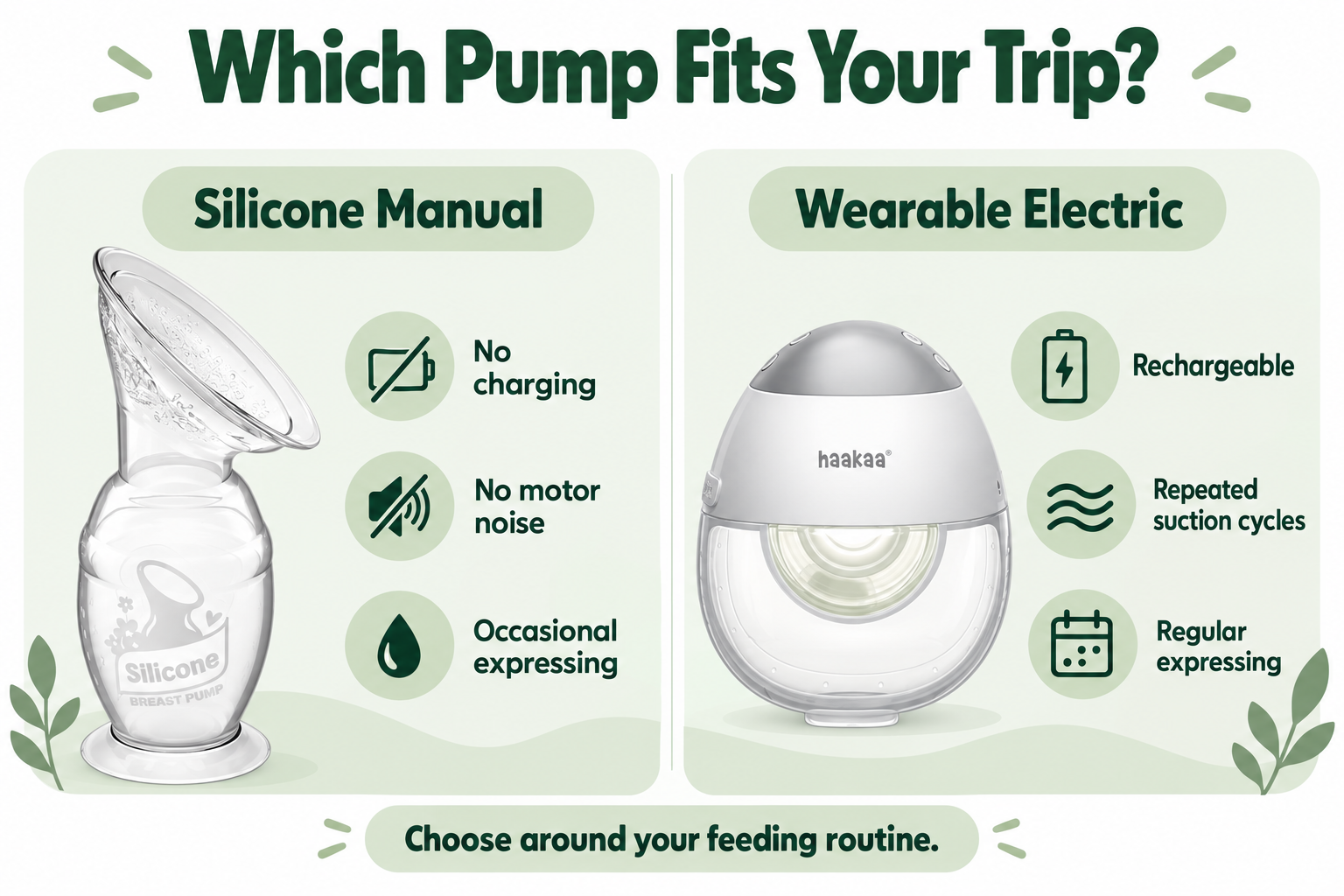
One distinction matters: the Haakaa silicone pump does not work like a conventional manual pump with a handle. It uses sustained suction after attachment. Your response to it may differ from your response to repeated manual or electric pumping.
When Is a Haakaa Manual Breast Pump Enough for a Trip?
A battery-free pump is useful when you want a simple travel companion and will mostly feed your baby directly.
Our manual breast pump has a one-piece silicone design, with no motor, charging cable or separate valves to assemble. The Gen 2 comes in 100ml and 150ml capacities, with a suction base that helps stabilise it on a suitable flat surface.
It may fit your trip if you:
- Want to collect milk from the opposite breast while nursing.
- Express occasionally and already know the pump works for you.
- Need a compact backup when charging is unavailable.
- Prefer fewer components to wash and organise.
Collection capacity is not a promise of milk output. A 150ml pump does not mean you should expect 150ml per session.
If you rely on pumping to replace feeds, test whether this setup meets your needs before travelling. Do not assume that collecting let-down milk will replace your usual full pumping sessions.
When Is an Electric Breast Pump More Practical?
An electric pump may be the more practical main option when travel involves repeated expression or time away from your baby.
The CDC advises travelling mothers to express about as often as their baby would normally feed, where possible. It also suggests considering an electric pump when maintaining milk supply over a longer period and having a backup expression method.
For mums considering an electric breast pump for travel in Malaysia, our Haakaa E-Ladybug offers:
- 224g per pump, approximately 448g for two, before accessories.
- 180ml capacity per collection cup.
- 3 pumping modes and 12 suction levels.
- USB Type-C charging.
- An in-bra design, with two pumps included in the Standard and Deluxe double-pump editions.
These specifications help with packing decisions; they do not predict milk output or session length.
The Deluxe Edition includes a carry case; the Standard Edition does not. Check the selected version before ordering.
Choose a comfortable setting and correct flange fit. Higher suction is not automatically better, and pumping should not cause pain or bruising.
Which Pump Suits Your Travel Plans?
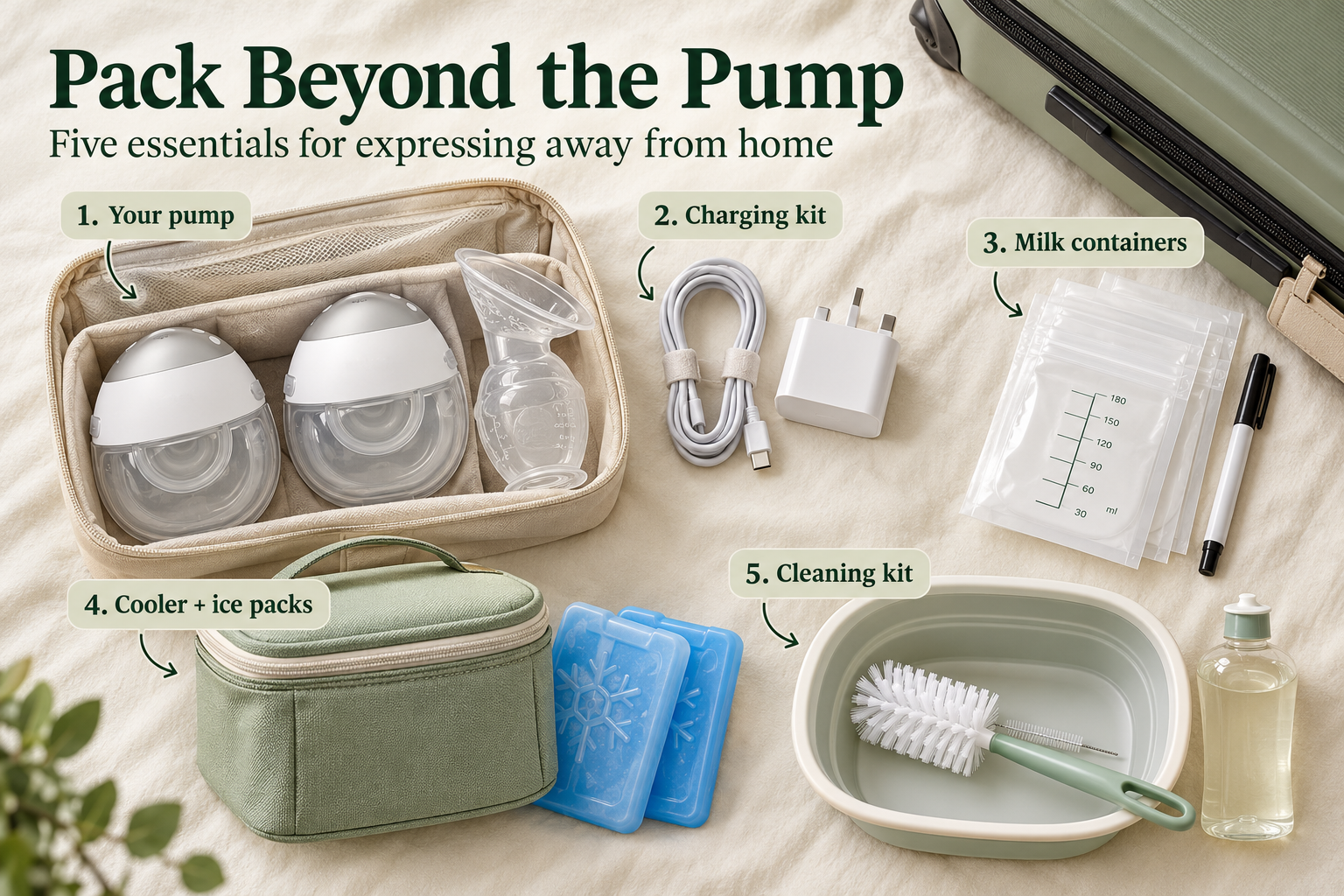
Plan around time apart from your baby and access to facilities, not simply how many nights you are away.
Short Outings With Your Baby
If you will mostly breastfeed directly, a familiar silicone pump may cover occasional collection needs. Pack a cover, clean containers and cooling supplies.
Work Trips or Longer Periods Apart
Bring a pump you already use successfully for regular expression. Build breaks into meetings and transfers, check charging arrangements, and confirm refrigerator access with your accommodation.
A hotel minibar is only useful for milk storage if it maintains the required temperature.
Flights and Long Journeys
Keep essential pumping equipment accessible. Before departure, check your airline and departure, transit and destination airport rules for expressed milk, ice packs, batteries and baggage allowances.
Malaysia Airlines lists baby milk among its exempted cabin items, with conditions. Confirm your allowance, particularly when travelling without your child.
Use a suitable seated space. Wearable pumps still need hygienic handling, positioning and emptying.
How Should You Store Expressed Milk While Travelling in Malaysia?
Keeping milk cold deserves its own plan, whichever pump you pack.
CDC guidance gives these limits for freshly expressed milk:
| Storage Condition | Guidance |
|---|---|
| Room temperature of 25°C or colder | Up to 4 hours |
| Refrigerator at 4°C | Up to 4 days |
| Insulated cooler with frozen ice packs during travel | Up to 24 hours |

The 25°C condition matters in Malaysia. The four-hour guideline should not be applied to milk left in a hot car, direct sun or a warm bag.
Use frozen ice packs and keep the cooler closed as much as practical. Refrigerate or use the milk promptly on arrival; an uncooled bag does not provide the same storage conditions.
Label containers with the expression date and time. Our breast milk storage bags and other storage options can help organise your kit, but containers still need appropriate cooling.
These general storage guidelines concern healthy, full-term babies. Ask your healthcare team for individual instructions if your baby is premature or unwell.
How Can You Keep Pump Parts Clean Away From Home?
Both pump types need cleaning after use.
The CDC recommends washing hands with soap and water for 20 seconds before pumping and cleaning milk-contact pump parts after every use.
For your travel kit:
- Pack washing supplies, a dedicated clean wash basin and any suitable brushes.
- Separate used parts from clean, dry equipment.
- Wash disassembled milk-contact parts and rinse thoroughly.
- Let parts air-dry completely before storing them in a protected container.
- Follow the manufacturer’s instructions for sterilising compatible parts.
Do not wash parts directly in a communal sink. Keep electric motors separate from washable components and never immerse them in water.
CDC guidance highlights daily sanitising as especially important for babies under 2 months, premature babies and babies with weakened immune systems. Plan washing facilities or sufficient clean equipment in advance.
Which Pump Should You Take?
Choose a Haakaa manual breast pump when you want simple, battery-free support for occasional expression and collecting during feeds. Consider an electric pump when regular expression is a central part of your travel routine. Try your chosen setup at home and have a backup expression plan.
At Haakaa Malaysia, we offer silicone and electric options for different feeding routines. Choose your travel setup with realistic cleaning, storage and charging arrangements in mind.
Sources
- Haakaa Malaysia: Gen 2 Silicone Breast Pump product information. Supports the manual pump’s design, capacities and suction-base features. Gen 2 Manual Milk Collector
- Haakaa Malaysia: E-Ladybug Wearable Electric Breast Pump specifications and edition contents. Supports the weight, capacity, modes, suction levels, charging connection and carry-case information. Haakaa 2pcs E-Ladybug
- Centers for Disease Control and Prevention: Travel Recommendations for Nursing Mothers. Covers expression frequency, choosing equipment and backup plans. CDC
- Centers for Disease Control and Prevention: Breast Milk Storage and Preparation, including its storage guide. Supports the temperature and storage-time guidance. CDC
- Centers for Disease Control and Prevention: How to Clean and Sanitize Breast Pumps. Supports handwashing, cleaning after use, drying and sanitising guidance. CDC
- NHS: Expressing and Storing Breast Milk. Covers pump selection, adjustable suction and comfortable flange fit. NHS
- Malaysia Airlines: Cabin Baggage, Exempted Items. Provides airline-specific information about carrying baby milk. malaysiaairlines.com
Frequently Asked Questions
Is a Haakaa Manual Breast Pump Good for Travel?
Yes, it can be useful for occasional expressing and collecting milk during breastfeeding. Its battery-free design keeps the kit simple. Try it before departure to confirm it suits your needs, particularly if you intend to use it instead of your usual pump.
Can a Haakaa Silicone Pump Replace an Electric Pump?
It depends on your routine and response. A silicone suction pump may suit occasional use, but it should not automatically replace a pump you rely on for regular expression. Seek lactation advice if you are planning prolonged separation from your baby.
Does an Electric Pump Always Collect More Milk?
No. Output depends on several factors, including fit, comfort, timing and individual response. Electric pumping provides repeated suction cycles and may be more practical for frequent sessions, but neither a bigger collection cup nor a stronger setting guarantees more milk.
Can I Take a Breast Pump on a Plane?
Check your airline’s rules for the pump, its batteries and baggage allowance. Confirm expressed milk and ice-pack requirements with the relevant airports too. Rules can differ by route and whether your baby is travelling with you.
How Long Can Breast Milk Stay in a Cooler While Travelling?
CDC guidance allows freshly expressed milk in an insulated cooler with frozen ice packs for up to 24 hours. Keep it cold throughout the journey, then use it promptly or transfer it to suitable storage on arrival.
Do I Need to Clean My Pump After Every Travel Session?
Yes. Clean milk-contact parts after every use and let them dry thoroughly. Follow the manufacturer’s instructions for compatible sterilising methods, and keep electric motors out of water. Plan washing facilities or sufficient clean equipment before leaving.