
Key Takeaways
- Baby food feeder teethers help babies transition from milk to solid foods by allowing them to explore new textures safely. They also help parents feel more confident while providing relief for sore teething gums.
- Food-grade silicone pouches are easier to clean and more hygienic than traditional mesh feeders, which can trap food residue and may develop mold, especially in warm and humid environments.
- Understanding the difference between gagging and choking helps parents and caregivers respond correctly.
- The 30-day transition guide helps babies become comfortable with new foods. It gradually prepares them for self-feeding with soft finger foods as they develop their chewing and eating skills around 8 months old.
- Choosing baby feeding products that meet safety standards such as LFGB, FDA, ASTM, and EN71 helps ensure they are made from safe, non-toxic materials and are strong enough for everyday use.
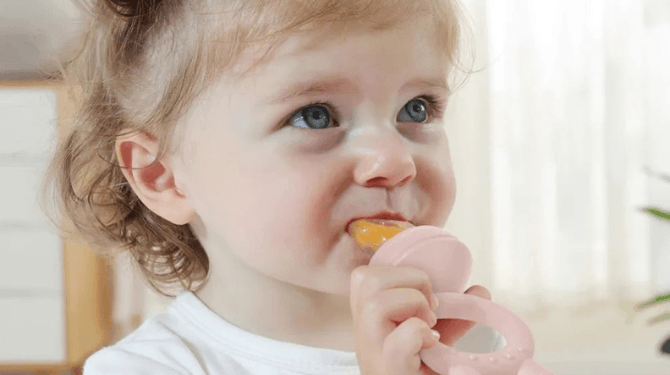
A baby food feeder teether is a helpful 2-in-1 feeding accessory designed for babies who are starting solids and going through teething. It comes with an easy-to-hold handle connected to a silicone or mesh pouch where you can place fresh or frozen food. Babies can safely chew on the feeder to enjoy small amounts of food while soothing their sore gums. The design also helps prevent large, unchewed food pieces from entering the baby’s airway.
Starting solid foods is an exciting new milestone for your baby, but it can also come with many worries. For many parents, concerns about choking and dealing with a baby’s sore gums during teething can make mealtimes feel stressful.
A baby food feeder teether can help make this stage easier by allowing your little one to safely explore new flavours and textures while providing comfort for sore gums.
This article provides a simple, easy-to-follow guide on how to introduce solids to your baby while addressing common concerns, so you can make the weaning journey a more comfortable and enjoyable experience for both you and your baby.
Why Use a Baby Food Feeder Teether When Introducing Solids
Introducing solid foods is an important step in your baby’s growth and development. Around 6 months old, babies are usually ready to begin trying complementary foods as breast milk or formula alone may no longer provide all the nutrients and energy they need.
This recommendation is also supported by the Ministry of Health Malaysia (KKM) Dietary Guidelines.
A baby food feeder teether can make this transition easier by giving babies a safer way to explore new foods while providing comfort during teething. It helps address three common challenges parents face when introducing solids:
Helps Reduce Choking Concerns
A baby food feeder teether allows babies to taste food through small openings in the silicone or mesh pouch. Instead of biting off large pieces, babies can safely enjoy small amounts of food, such as soft fruits, purees, or juices, while learning new flavours and textures.
Provides Relief for Sore Teething Gums
When filled with chilled fruits or frozen food, the feeder acts like a gentle teething toy. The cool temperature helps soothe swollen gums, while chewing on the feeder provides comfort as new teeth begin to appear.
Supports Early Self-Feeding Skills
Holding and using a feeder teether helps babies practise their grip, coordination, and confidence with food. It allows them to explore eating independently while gradually becoming more comfortable with new tastes and textures.
Overall, a baby food feeder teether serves as a helpful stepping stone between milk feeding and solid foods. It gives babies a safe way to practise eating.
How to Safely Introduce Solid Foods to Your Baby: Step-by-Step Guide
A baby food feeder teether can be a helpful tool when your baby starts exploring solid foods. However, it works best as a temporary support tool to help babies build confidence, rather than replacing normal eating skills. As your baby grows, they also need opportunities to practise important skills like chewing, biting, and moving food around their mouth.
This 30-day transition guide helps parents gradually introduce new foods and guide babies from using a feeder teether to eating soft finger foods more independently.
Stage 1: Getting Baby Comfortable with First Foods (Around 6 Months or days 1-10)
Start by helping your baby get comfortable with holding and using the feeder. You can place familiar options, such as frozen breast milk or chilled formula, inside the feeder pouch to provide gentle relief for sore gums.
Allow your baby to hold the handle, chew on the feeder, and explore it for about 5–10 minutes during each session. This helps them practise bringing the feeder to their mouth and building early self-feeding confidence.
Note: Always use formula chilled from the fridge, as infant formula should not be frozen.
Stage 2: Exploring Soft Foods and New Tastes (Days 11–20)
Once your baby can confidently use the feeder, introduce soft, nutritious foods such as avocado, banana, papaya, or steamed sweet potato. These foods provide new tastes and textures while remaining easy for babies to explore.
Chill soft fruits or cooked vegetables before placing them inside the feeder for added teething comfort.
During this stage, offer the feeder during family mealtimes to help your baby learn positive eating habits. Always check the feeder pouch before use to ensure it is clean and in good condition.
Stage 3: Moving Towards Finger Foods (Around 7–8 months or days 21–30)
As your baby becomes more comfortable with food, slowly reduce dependence on the feeder teether and introduce soft finger foods. Start by offering some food through the feeder while placing safe, baby-sized pieces such as soft-steamed carrot sticks (cooked until easily mashable) or soft avocado slices on the high-chair tray.
Over time, use the feeder mainly for teething comfort rather than main meals. This gradual transition helps your baby develop independent eating skills while making the move to solid foods feel more natural and less stressful for both baby and parents.
Understanding the Difference Between Gagging and Choking When Introducing Solids
One of the biggest concerns parents have when starting solids is knowing whether their baby’s reaction to food is normal or a sign of danger. When using a baby food feeder teether, babies may sometimes gag as they explore new flavours, textures, and feeding movements. Understanding the difference between gagging and choking helps parents stay calm and respond appropriately during mealtimes.
Gagging: A Normal Part of Learning to Eat
Gagging is a natural protective reflex that helps babies learn how to handle food. It often happens when new foods or objects reach areas of the mouth that are still sensitive.
Your baby may cough, make noises, push their tongue forward, or have a red face while gagging. Although it can look alarming, this is usually a healthy response that helps prevent food from moving too far into the throat.
Choking: A Serious Safety Concern
Choking happens when food or an object blocks a baby’s airway, making it difficult for them to breathe. Unlike gagging, choking is usually quiet because the baby cannot cough, cry, or make sounds. Signs may include difficulty breathing, a pale or bluish face, or a panicked expression.
A baby food feeder teether helps reduce this concern by keeping larger pieces of food safely inside the feeder while allowing small amounts of flavour and juice to pass through. This allows babies to practise chewing, tongue movement, and swallowing skills while exploring food in a safer way.
Understanding these differences can help parents feel more confident as their baby begins the journey from milk feeding to solid foods.
Conclusion
A baby food feeder teether helps your little one safely explore new flavours, ease teething discomfort, and gradually build confidence with eating.
For parents in Malaysia, Haakaa Malaysia offers thoughtfully designed baby feeding products made from 100% food-grade silicone that are free from BPA, PVC, phthalates, and artificial colours. Durable, reusable, and easy to clean, Haakaa products are designed to support everyday feeding needs.
Help your baby enjoy a smoother transition to solids with the Haakaa Fresh Food Feeder Teether, a simple 2-in-1 solution for safe food exploration and teething comfort.
Sources:
- U.S. Food and Drug Administration (FDA) – Infant Formula Safety Do's and Don'ts (May 2023) / Safe Handling of Infant Formula (August 2024).
- Centers for Disease Control and Prevention (CDC) – Infant and Toddler Nutrition: Choking Hazards (December 2024).
- Ministry of Health Malaysia (KKM) – Malaysian Dietary Guidelines for Children and Adolescents (2023) / First 1000 Days of Life Manual (2023). [suspicious link removed]
- American Academy of Pediatrics (AAP) – Choking Prevention and Safe Feeding Practices (2024).
Frequently Asked Questions About Baby Food Feeder Teether
1. What age can I start using a baby food feeder teether?
You can usually introduce a feeder teether around 6 months old when your baby shows signs of being ready for solids. If you are unsure, consult your paediatrician before starting.
2. Can I put frozen breast milk or formula in a feeder teether?
You can use frozen breast milk, but infant formula should never be frozen. Freezing formula causes the fats and liquid to separate, leading to a lumpy texture and potential loss of nutrient stability. For formula-fed babies, use formula that has been chilled in the refrigerator instead to safely soothe sore gums.
3. How do I clean a silicone feeder teether properly?
Take apart all parts after use, wash with warm water and baby-safe soap, sterilise when needed, and let everything dry completely before storing.
4. Will a feeder teether delay my baby’s ability to eat solid foods?
No, when used correctly. A feeder teether is a temporary tool to help babies gain confidence before moving on to soft finger foods.
5. What are the best first foods to put in a feeder teether?
Good options include banana, avocado, papaya, sweet potato, soft-steamed carrot, ripe mango, or chilled formula. Avoid sticky foods that may block the feeder.
6. Are silicone feeder teethers safer than mesh feeders?
Silicone feeders are often easier to clean and maintain because they do not trap food residue as easily. They are also durable, gentle on gums, and suitable for regular sterilisation.