
Key Takeaways
- Silicone breast pumps use suction created by compressing the silicone body, making them useful during breastfeeding, let-down or occasional milk collection.
- Standard manual pumps use repeated hand pumping and give mums more direct control over pumping rhythm.
- Silicone pumps are generally simpler to clean because simple models tend to have fewer milk-contact parts.
- Your routine matters more than the pump category alone, especially how often you express and whether you mainly breastfeed directly.
- Some mums may benefit from both, using a silicone pump for convenient milk collection and another pump for dedicated expressing sessions.
For many mums, a silicone breast pump in Malaysia can be a convenient choice for simple milk collection, especially while breastfeeding directly. A standard manual pump may suit you better if you prefer controlling each pumping cycle or need to express larger amounts during dedicated sessions.
At Haakaa, our silicone breast pumps are designed around simplicity. Instead of using a handle or motor, you squeeze the silicone body to create suction once it is attached to the breast. This can make them useful for collecting milk during let-down, expressing occasionally or using on the opposite breast while your baby feeds.
The right choice depends on your routine, how frequently you express and how much control you prefer.
|
Feature |
Silicone Breast Pump |
Standard Manual Pump |
|
Suction method |
Suction created by compressing the silicone body |
Repeated hand-lever suction |
|
Hands required |
Can often remain attached without continuous pumping |
Usually requires continuous hand pumping |
|
Number of parts |
Usually very few in simple designs |
Usually several |
|
Noise |
Silent |
Very quiet |
|
Portability |
Extremely compact |
Compact, but generally bulkier |
|
Cleaning |
Generally simple |
More individual parts to clean |
|
Pumping control |
Less direct cycle-by-cycle control |
Greater rhythm control |
|
During breastfeeding |
Convenient on the opposite breast |
Possible, but requires active pumping |
|
Power source |
None |
None |
|
Best suited to |
Let-down, occasional expressing and milk collection |
Dedicated manual pumping sessions |
What Makes Silicone Suction Pumps Unique?
A silicone breast pump works differently from the traditional hand-operated pump many mums picture when they hear “manual breast pump”.
Instead of repeatedly pressing a handle, you gently squeeze the silicone pump and attach it to your breast. Once a comfortable seal forms, the suction can collect milk released during let-down and may also remove some additional milk.
There are no cords, batteries or motors involved, and once milk begins flowing, you do not have to continuously squeeze a lever.
One practical use is during breastfeeding. If your baby is feeding from one breast and milk is leaking from the other during let-down, you can attach a silicone pump to the opposite side to collect some of that milk.
For many mums, the appeal comes down to simplicity.
Hands-Free Convenience: Once attached securely, there is no repetitive pumping motion required.
Silent Use: No motor means you can use it quietly, including during night feeds.
Minimal Parts: Simple silicone designs mean fewer components to assemble and wash.
Easy Portability: A compact pump can fit easily into your handbag, pumping bag or luggage.
Results vary between mums. Some may collect milk quickly during let-down, while others may express more effectively with an actively operated pump.
If you already produce more milk than your baby needs, use suction cautiously. Regularly removing additional milk may encourage further production, and excessive or prolonged suction may cause discomfort.
How Does Silicone Suction Differ From Hand Lever Pumping?
The main difference is how the suction is generated.
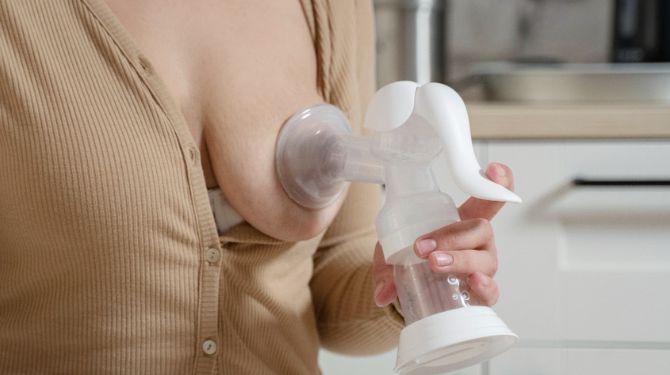
With a standard manual pump, you repeatedly press and release a handle to create suction cycles.
With a silicone pump, you compress the silicone body before attaching it to the breast. This creates suction without requiring continuous hand pumping.
Silicone Pumps Require Less Hand Movement
Traditional manual pumps require you to keep squeezing the handle throughout most of the session.
A silicone pump requires less active hand movement once securely attached. This is one reason many mums like using a Haakaa breast pump while nursing.
You may still need to reposition the pump or adjust the suction for comfort.
Manual Lever Pumps Give You More Rhythm Control
A standard manual pump gives you more control over pumping speed and rhythm.
You can speed up, slow down, pause or change your pattern. Depending on the model, you may also have some control over suction strength.
Silicone pumps provide less cycle-by-cycle control. You can adjust suction by changing how firmly the pump is compressed or repositioning it, but you are not manually creating every cycle.
They Often Suit Different Situations
A silicone pump can be particularly useful for:
- Collecting milk from the opposite breast during feeding.
- Catching let-down instead of losing milk into a breast pad.
- Occasional expressing at home.
- Travelling without electrical equipment.
- Keeping a simple backup pump in your bag.
A standard manual pump may suit you better if you regularly sit down specifically to express milk and prefer controlling each pumping cycle yourself.
This is why it makes more sense to choose based on your routine rather than simply asking which pump is stronger.
Which Option Is Easier to Clean and Sterilise Every Day?
A silicone breast pump can have a practical advantage because simple models usually have fewer parts to take apart, wash, dry and reassemble.
Standard manual pumps commonly include several milk-contact components, such as a breast shield, bottle, connector, valve and membrane, depending on the model.
The CDC recommends thoroughly cleaning breast pump parts that come into contact with breast milk after use because germs can grow in milk residue.
A simple routine looks like this:
Before Use: Wash your hands and make sure your pump is clean.
After Pumping: Store the milk safely, then wash all milk-contact surfaces thoroughly.
Sanitising or Sterilising: Follow the care instructions for your specific Haakaa product. CDC guidance recommends sanitising pump parts at least daily for extra protection, especially if your baby is under 2 months old, was born prematurely or has a weakened immune system.
Drying: Allow cleaned components to air-dry completely before storing.
For older, healthy babies, daily sanitising may not be necessary if pump parts are carefully cleaned after every use.
Which Breast Pump Type Fits Your Daily Routine Best?
The easiest way to choose is to think about how pumping fits into your day.
If You Mainly Breastfeed Directly
A silicone breast pump can fit naturally into your routine.
You can attach it to the opposite breast while your baby feeds and collect milk released during let-down without creating a separate pumping session.
If you already have an oversupply, be cautious about using strong suction at every feed.
If You Only Express Occasionally
A silicone pump can work well if you mainly breastfeed but occasionally want expressed milk available.
If you prefer a dedicated pumping session and actively controlling the rhythm, a standard manual pump may suit you better.
If You Pump Several Full Feeds Every Day
If you express several feeds every day, an electric or double electric pump may be more efficient and practical than relying only on a manual or silicone pump.
A silicone or standard manual pump can still be useful as a portable or backup option.
If You Travel or Spend a Lot of Time Outside
Silicone pumps are particularly convenient when portability matters.
There are no:
- Batteries
- Charging cables
- Motors
- Power points
- Complicated assemblies
That makes a Haakaa silicone breast pump easy to keep in your handbag, pumping bag or luggage. It is also silent, which can be useful when you want to express or collect milk discreetly.
Is a Silicone Breast Pump Better for Malaysian Mums?
It can be, especially if your priorities are simplicity, portability and convenient milk collection.
A compact silicone pump can be useful when you want something that does not need electricity or charging, whether you are moving between home, work, family homes, confinement centres or childcare.
At the same time, your individual breastfeeding situation matters more than location.
If you are experiencing persistent pain, concerns about milk supply, difficulty expressing or concerns about your baby's feeding, speak with a lactation consultant, doctor or other qualified healthcare professional.
A breast pump can support your feeding routine, but it should not replace personalised breastfeeding advice where it is needed.
Which Breast Pump Should You Choose?
A silicone breast pump and a standard manual pump are both manual, unpowered options, but they work differently.
Silicone pumps use suction created by compressing the silicone body and are particularly convenient for collecting let-down, occasional expressing and use during breastfeeding. Standard manual pumps use repeated hand-operated suction cycles and provide more direct control over pumping rhythm.
If you mainly breastfeed directly, want to collect let-down or need something simple to carry around, a silicone pump may suit you well. If you prefer dedicated manual pumping sessions, want more control over each pumping cycle or need to express larger amounts regularly, a hand-lever pump may be a better fit.
If you pump several full feeds every day, you may also want to consider whether an electric pump better suits your routine.
At Haakaa Malaysia, we design breastfeeding products around making everyday feeding and milk collection simpler for mums. If you are comparing options, you can explore our Haakaa silicone breast pump range and other breastfeeding essentials.
Sources
- Centers for Disease Control and Prevention (CDC): Guidance on cleaning, sanitising and caring for breast pump equipment and milk-contact components.
- NHS: Guidance on expressing breast milk and choosing between manual and electric breast pumps.
- Australian Breastfeeding Association: Guidance on choosing breast pumps, silicone milk collectors, leaking breasts and oversupply.
Frequently Asked Questions About Silicone Breast Pumps vs Manual Pumps
Can a Silicone Breast Pump Replace a Manual Breast Pump?
For some mums, it may be enough if the main goal is collecting let-down or expressing small amounts occasionally. If you need to express larger amounts or pump several times each day, a standard manual or electric pump may be more suitable.
Does a Silicone Breast Pump Actually Pump Milk?
Yes. A silicone breast pump creates suction around the breast, which can collect milk during let-down and may remove additional milk. Unlike a standard hand-lever pump, it does not create repeated pumping cycles. How much you collect varies depending on your let-down, milk supply, breast fullness and individual response.
Can I Use a Haakaa Breast Pump While Breastfeeding?
Yes. One of the most common ways to use a Haakaa breast pump is on the opposite breast while your baby feeds. This can help collect milk released during let-down without requiring a separate pumping session.
Is a Haakaa Breast Pump a Manual Pump?
Yes. It is a manual, unpowered breast pump, but it works differently from a standard hand-lever pump. Instead of repeated handle pumping, you compress the silicone body to create suction, and it requires no electricity or batteries.
How Often Should I Clean My Silicone Breast Pump?
Clean all milk-contact surfaces thoroughly after each use and follow the cleaning and sanitising instructions supplied with your specific Haakaa model. For extra protection, CDC guidance recommends sanitising pump parts at least daily, particularly when a baby is under 2 months old, was born prematurely or has a weakened immune system.
Is a Silicone Breast Pump Good for First-Time Mums?
It can be a useful option for some first-time mums who want a simple, compact way to collect let-down or express small amounts occasionally.
Comfort and milk collection vary from person to person. If you have ongoing pain, concerns about milk supply or difficulty feeding your baby, speak with a lactation consultant or other qualified healthcare professional.