

Silicone Breast Pump vs Traditional Plastic Manual Pumps
Key Takeaways
- Silicone suction breast pumps mainly collect milk during let-down, while traditional manual pumps actively express milk through repeated suction.
- Silicone pumps are convenient during breastfeeding, but frequent use may contribute to oversupply.
- Traditional manual pumps offer greater control over pumping rhythm and suction.
- Both are portable and electricity-free, although comfort, cleaning and milk output vary.
- Mums who express milk frequently may find an electric breast pump more practical.
Silicone breast pumps are useful for collecting let-down milk, while traditional plastic manual pumps offer greater control when actively expressing breast milk. Both work without electricity, but their designs suit different breastfeeding needs.
For Malaysian mums, the right choice depends on whether you want to collect milk during feeds, prepare occasional bottles or express milk regularly after returning to work.
Here's how they compare.
Silicone Breast Pump vs Traditional Manual Pump: Quick Comparison
|
Feature |
Silicone Breast Pump |
Traditional Manual Pump |
|
How it works |
Steady suction |
Repeated suction using a handle |
|
Main purpose |
Collecting milk during let-down |
Actively expressing milk |
|
Suction control |
Limited adjustment |
Controlled through handle movements |
|
Hands-free use |
Can stay attached but needs monitoring |
Requires hand operation |
|
Cleaning |
Usually fewer parts |
Multiple components |
|
Portability |
Very compact |
Compact but bulkier |
|
Best for |
Collecting milk during breastfeeding |
Occasional planned pumping |
|
Main limitation |
Less control over expression |
Requires physical effort |
Quick verdict: Choose a silicone pump for convenient let-down collection or a traditional manual pump when you need to actively express milk.
How Does a Silicone Breast Pump Work?
A silicone breast pump creates suction when its flexible body is squeezed and released against the breast.
The vacuum helps it stay attached and collect milk, particularly during the let-down reflex.
For example, a mum breastfeeding on her left side can attach a silicone pump to her right breast to collect milk during the feed.
Unlike hand-operated pumps, silicone suction collectors generally rely on steady suction rather than repeated pumping cycles.
Advantages of Silicone Breast Pumps
- Simple design: Many models have just one main component.
- Easy cleaning: Fewer parts to wash and assemble.
- Quiet operation: No motor or repeated handle movements.
- Portable: Lightweight and convenient for travelling.
- Convenient collection: Useful while breastfeeding directly.
What Are the Limitations?
Milk collection varies. Some mums collect noticeable amounts during let-down, while others collect very little.
Silicone pumps also offer limited suction control.
According to the Australian Breastfeeding Association, frequent suction-based collection may remove more milk than necessary and contribute to oversupply.
Strong or prolonged suction can also cause discomfort.
Remember: Silicone pumps are useful milk collectors, but they may not replace traditional pumps for regular expression.
How Does a Traditional Plastic Manual Breast Pump Work?
A traditional manual breast pump uses a hand-operated handle to create repeated suction cycles.
The breast shield fits over the nipple, while squeezing and releasing the handle draws milk into an attached container.
Unlike silicone collectors, these pumps allow users to control the pumping rhythm.
Advantages of Traditional Manual Pumps
- Greater suction control: Adjust the rhythm and pressure through handle movements.
- Active expression: Suitable for planned pumping sessions.
- Electricity-free: No charging or batteries needed.
- Portable: Convenient for occasional use outside the home.
- Direct bottle collection: Many models collect milk into an attached bottle.
What Are the Limitations?
Repeatedly squeezing the handle can become tiring during longer sessions.
Traditional pumps also have multiple components, including valves and connectors, which require thorough cleaning.
For mums expressing milk several times daily, an electric breast pump may be more practical.
Which Breast Pump Collects More Milk?
Traditional manual pumps provide more active control, but neither design guarantees greater milk output.
The amount collected depends on:
- Individual milk supply and let-down response
- Pump fit and suction strength
- Time since the previous feed
- Pumping frequency and duration
A silicone suction collector may collect milk effectively during breastfeeding but be less suitable for separate expressing sessions.
A traditional manual pump uses repeated suction cycles, making it more suitable for planned expression.
However, stronger suction does not necessarily produce more milk. Excessive suction may cause pain or irritation.
Important: Pump output alone does not indicate whether a baby receives enough breast milk. Weight gain, feeding effectiveness and wet nappies are more useful indicators.
Read More: How to Clean & Maintain Portable Breast Pump Parts in Malaysia
Which Breast Pump Is More Comfortable?
Comfort depends on breast and nipple anatomy, pump positioning, suction strength and design.
Silicone pumps are flexible, but excessive suction may pull breast tissue uncomfortably. Traditional manual pumps allow rhythm adjustments, although poorly fitted breast shields may cause rubbing.
|
Comfort Factor |
What to Check |
|
Breast shield fit |
No painful rubbing or compression |
|
Suction strength |
Comfortable throughout use |
|
Pump positioning |
Secure without excessive pulling |
|
Pump weight |
A full container may pull downwards |
|
Handle design |
Comfortable during repeated movements |
Neither type should cause persistent pain, bruising or nipple damage. If discomfort continues, stop using the pump and seek breastfeeding support.
Which Breast Pump Is Easier to Clean?
Silicone pumps are often easier to clean because they have fewer components. Traditional manual pumps require additional attention to valves, connectors and breast shields.
However, both must be cleaned properly after every use.
According to the US Center for Disease Control and Prevention (CDC), cleaning milk-contact pump parts after every use helps protect babies from harmful germs.
Daily sanitising provides extra protection, particularly for babies:
- Younger than 2 months
- Born prematurely
- With weakened immune systems
For older, healthy babies, daily sanitising may not be necessary if equipment is thoroughly cleaned after each use.
Breast Pump Cleaning Checklist
- Wash your hands with soap and water for at least 20 seconds.
- Disassemble removable pump components.
- Wash milk-contact parts with dishwashing liquid and clean water in a separate basin.
- Rinse thoroughly and allow everything to air-dry.
- Sanitise according to the manufacturer's instructions and your baby's needs.
- Store dry equipment in a clean location.
For components that are safe to boil, CDC guidance recommends boiling for 5 minutes after cleaning. Always check the manufacturer's instructions first.
Breast Milk Storage in Malaysia: How Long Is It Safe?
Malaysia's warm climate makes proper breast milk storage especially important.
The CDC's breast milk storage guidelines indicate that freshly expressed milk can be stored for different durations depending on temperature.
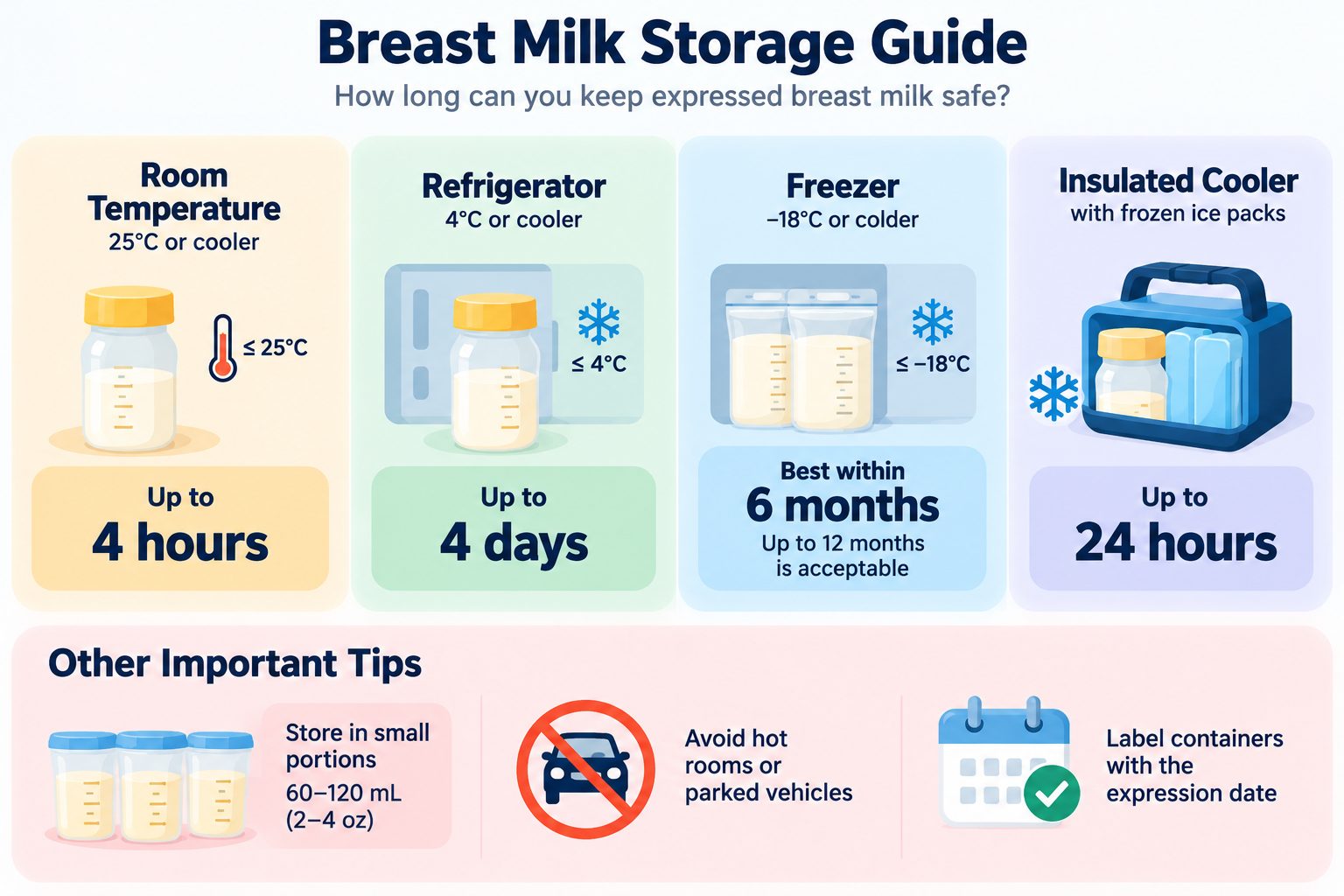
These limits apply to freshly expressed milk when the recommended temperatures are maintained.
What About Thawed or Leftover Breast Milk?
Previously frozen milk follows different rules:
- Thawed in the refrigerator: Use within 24 hours after completely thawing.
- Thawed milk warmed or brought to room temperature: Use within 2 hours.
- Leftover milk after feeding: Use within 2 hours after the baby finishes.
- Fully thawed milk: Do not refreeze.
To reduce wastage, consider freezing milk in portions of 60–120 mL (2–4 oz) or amounts matching your baby's usual feeds.
Avoid leaving expressed breast milk in hot rooms or parked vehicles. When travelling, use an insulated cooler with frozen ice packs and transfer the milk to suitable storage promptly.
Which Pump Is Better for Malaysian Working Mums?
The answer depends on how often milk needs to be expressed.
For Mums Who Mainly Breastfeed Directly
A silicone pump may be sufficient for collecting occasional let-down milk during feeds.
However, frequent unnecessary milk removal may contribute to oversupply.
If breastfeeding is going well and you do not need extra stored milk, a pump may be unnecessary.
For Mums Returning to Work
A traditional manual pump may be suitable for occasional expression or as a backup.
However, mums who pump several times throughout the working day may find repeated hand pumping tiring. An electric pump may be more practical.
Working mums should prepare a clean expressing space, suitable storage containers and access to refrigeration.
Freshly expressed milk can be refrigerated at 4°C or colder for up to 4 days, while a properly chilled insulated cooler can be used for up to 24 hours.
Can You Use Both Types of Breast Pumps?
Yes. Silicone and traditional manual pumps can complement each other.
For example, a mum might use a silicone pump during breastfeeding and a traditional manual pump when preparing an occasional bottle.
However, owning both is unnecessary if one already meets your needs.
Choose based on your milk collection and expression needs rather than assuming more equipment means better results.
What Should You Check Before Buying a Breast Pump in Malaysia?
Before buying a silicone breast pump in Malaysia, consider:
|
Buying Consideration |
What to Look For |
|
Main purpose |
Let-down collection or active expression |
|
Frequency |
Occasional use or regular pumping |
|
Comfort |
Suitable fit and manageable suction |
|
Material |
Clear specifications and food-contact suitability |
|
Cleaning |
Easy-to-access components |
|
Capacity |
Enough collection space |
|
Replacement parts |
Availability of valves and accessories |
|
Portability |
Suitable for your daily routine |
|
Price |
Value based on expected use |
Do not assume silicone is automatically safer or more comfortable than plastic. Many traditional plastic pumps also include soft silicone breast shields.
Choose a product with clear instructions and a design that suits your breastfeeding needs.
Silicone or Traditional Manual Breast Pump: Which Should You Choose?
|
Your Situation |
Recommended Option |
Why |
|
Collecting let-down during feeds |
Silicone breast pump |
Convenient collection |
|
Preparing occasional bottles |
Traditional manual pump |
Greater expression control |
|
Pumping frequently at work |
Consider an electric pump |
May reduce physical effort |
|
Travelling or needing a backup |
Either manual option |
Both work without electricity |
|
Experiencing pain or supply concerns |
Seek breastfeeding support |
May require professional assessment |
If you mainly breastfeed directly, a silicone pump may provide everything needed for occasional collection.
If you regularly express milk away from your baby, a traditional manual or electric pump may be more suitable.
Choosing the Right Pump For You and Your Baby
Both silicone and traditional plastic manual breast pumps have advantages. Silicone pumps offer convenient let-down collection, while traditional manual pumps provide greater control over active expression.
If you're comparing breastfeeding essentials, Haakaa Malaysia offers silicone suction breast pumps and milk collection products worth considering. Check the product specifications and instructions to choose a pump that suits your comfort, feeding habits and milk collection needs.
Medical disclaimer: This article provides general breastfeeding information, not medical advice. Consult a qualified healthcare professional or lactation consultant for persistent pumping pain, milk supply concerns or feeding difficulties.
Frequently Asked Questions About Silicone Breast Pumps vs Traditional Plastic Manual Pumps
Can a Silicone Breast Pump Replace an Electric Pump?
It may be sufficient for occasional collection, but it may not provide adequate milk removal for mums who need to express regularly or maintain supply while separated from their babies.
Can I Use a Silicone Breast Pump Every Day?
Yes, when appropriate. However, frequent or prolonged suction may cause discomfort or contribute to oversupply. Use gentle suction and seek advice if problems develop.
Which Pump Is Better for First-Time Mums?
A silicone pump may be simpler for collecting milk during feeds. A traditional manual pump is more suitable for planned expression.
Are Silicone Breast Pumps Safe?
They can be safe when used correctly, cleaned thoroughly and positioned comfortably. Stop using the pump if it causes persistent pain, bruising or irritation.
How Long Can Breast Milk Stay at Room Temperature in Malaysia?
Freshly expressed breast milk can remain at room temperature for up to 4 hours at 25°C or cooler. Refrigerate promptly if the room is warmer.
Do I Need a Breast Pump If I Breastfeed Directly?
Not necessarily. If breastfeeding is going well and you do not need to store expressed milk, a pump may be unnecessary. Hand expression is another option.