
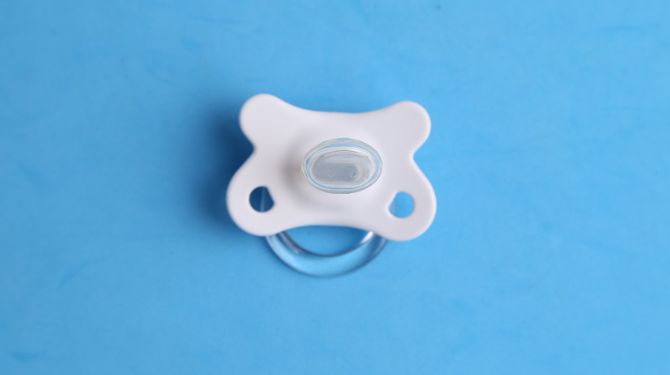
Key Takeaways
- Palm teethers are designed to sit within or around a baby's hand, which may make some designs easier for young babies to hold.
- Soft teething surfaces give babies something appropriate to chew and may help soothe tender gums.
- A broad holding area may help some babies maintain their grip more easily during use.
- Reaching, grasping and bringing a teether towards the mouth give babies opportunities to practise early hand movements.
- Choose an age-appropriate, intact teether that meets applicable safety requirements and supervise your baby during use.
A silicone palm teether is a soft teething toy shaped to fit within or around a baby's palm, giving little hands a broad area to hold while chewing on the silicone surface.
Unlike larger teething rings, palm teethers are designed with developing hands in mind. This can be useful because babies often begin mouthing and chewing objects before they can reliably hold onto toys for long periods.
Babies commonly begin teething at around four to seven months, although timing varies. Mouthing hands and objects may also begin before the first tooth appears.
For Malaysian mums dealing with toys constantly falling onto the floor, a palm teether can be a practical option for everyday teething and play.
What Is a Silicone Palm Teether?
A silicone palm teether is a baby teething toy made with soft silicone and designed so the main gripping area rests within or around the baby's palm.
Depending on the design, it may resemble an animal, fruit, hand or character. Chewable sections often extend outward so babies can bring them towards the mouth.
The main difference is the grip. Instead of relying on a baby holding a narrow section of a ring, a palm teether provides a broader area for the hand to hold.
How Is It Different From a Regular Teething Ring?
|
Feature |
Silicone Palm Teether |
Traditional Teething Ring |
|
Main Grip |
Sits within or around the palm |
Usually held around part of a ring |
|
Grip Design |
Broad holding area |
Narrower holding area |
|
Holding |
May suit some developing hands |
Varies by shape and baby |
|
Chewing Areas |
Often includes several textured surfaces |
Varies by design |
|
Material |
Commonly silicone |
Silicone, rubber or plastic |
Neither style is automatically better. Some babies may find a palm-style design easier to handle, while others prefer a traditional ring.
Why Is Silicone Commonly Used?
Silicone is commonly used in teethers because it can be soft and flexible.
However, material alone does not determine whether a teether is safe. Parents should check the product's age guidance, construction, cleaning instructions and safety information rather than assuming every silicone teether for a baby is the same.
What Are the Benefits of a Silicone Palm Teether for Babies?
The main benefit of a silicone palm teether is that it combines a chewable teething surface with a shape designed for small, developing hands.
It Gives Babies Something Appropriate to Chew
When teeth begin moving through the gums, babies commonly become more interested in biting and chewing.
Teething rings and similar products give babies something appropriate to chew and may help ease discomfort or distract them from it. A silicone palm teether serves a similar purpose while offering a different grip style.
It May Be Easier to Hold
Young babies are still developing their ability to grasp and hold toys.
Some palm-style teethers provide a broad area for the hand to hold rather than relying on a narrow section of a ring. Depending on the design and the baby, this may make the teether easier to handle.
It Offers a Drug-Free Teething Option
For mild teething discomfort, simple soothing methods can be useful before considering numbing products.
Options commonly recommended include gently massaging the gums or offering an appropriate firm teether. Certain benzocaine and lidocaine products are not recommended for treating teething pain in infants and young children.
It Can Be Easy to Clean
One-piece silicone designs may be convenient because they can have fewer joins or fabric sections where saliva and dirt collect.
Always follow the manufacturer's cleaning instructions before sterilising, boiling, chilling or exposing a teether to heat.
Why Are Palm Teethers Useful for Tiny Hands?
Palm teethers are designed to work with a baby's developing grip rather than requiring precise finger control.
Babies gradually learn to reach, grasp and manipulate objects, and suitable toys can give them opportunities to practise those movements.
The Grip Is More Forgiving
Holding a narrow section of a toy requires babies to keep their fingers around it.
Some palm teethers offer a broader contact area, so precise finger placement may be less important.
The Chewing Surface Stays Close to the Mouth
Many designs keep the chewable section close to the hand. This creates a relatively simple movement from holding the toy to bringing it towards the mouth.
For babies still practising hand-to-mouth coordination, that may make independent use easier.
Different Textures Add Variety
Palm teethers often combine textures such as raised bumps, smooth areas or soft ridges.
These surfaces give babies different ways to explore the toy through touch and mouthing.
Read More: How to Safely Introduce Solids Using a Baby Food Feeder Teether
How Does a Silicone Palm Teether Help With Fine Motor Practice?
A silicone palm teether does not teach fine motor skills by itself, but it can give babies opportunities to practise reaching, grasping, holding and hand-to-mouth coordination.
Development comes through repeated everyday movement and play rather than from one particular toy.
Babies Practise Grasping
When a baby closes their fingers around the central part of a teether, they are practising the movements involved in holding an object.
A broad grip area may also make precise finger positioning less important.
They Practise Hand-to-Mouth Coordination
Babies learn by repeatedly moving safe objects towards their mouths.
Those early movements may be inaccurate at first, but babies gradually become more coordinated through everyday practice.
They Learn to Adjust Their Grip
As babies rotate or reposition a teether, they may loosen, tighten or shift their grip.
For example, they might:
- Grip the centre.
- Lift it towards the mouth.
- Rotate it to reach another section.
- Reposition their fingers if it starts slipping.
These simple movements give babies useful opportunities to practise handling objects.
How Should You Choose a Silicone Palm Teether?
Before buying, check more than just the colour or design.
Material Information: Look for clear details about the materials used.
Age Suitability: Follow the manufacturer's recommended age range.
Construction: Look for a sturdy design without loose or detachable parts that could create a choking hazard.
Size: Choose an age-appropriate teether designed for safe mouthing and chewing.
Condition: Stop using it if you notice tearing, cracking, loose pieces or other damage.
Cleaning Instructions: Check how the product should be washed, sterilised or chilled.
For Malaysian parents shopping online, look for clear manufacturer information, age guidance, warnings and relevant product-safety details. Toys sold in Malaysia are subject to applicable consumer-protection and toy-safety requirements.
Can You Chill a Silicone Palm Teether?
Some silicone teethers can be chilled, but parents should follow the manufacturer's instructions.
Suitable teethers may be cooled in the refrigerator to provide a soothing sensation. Freezing is generally not recommended because a frozen teether can become too hard and may damage delicate gums.
How Can You Use a Palm Teether Safely?
Always supervise your baby while they are using a teether and inspect the product regularly for cracks, tears or loose parts.
Do not tie or attach a teether around your baby's neck, as products worn around the neck can create choking or strangulation risks.
It is also important not to blame every symptom on teething. Drooling and increased chewing are common, and a slight rise in temperature may occur. However, a true fever should not automatically be attributed to teething.
If your baby has a fever or appears unwell, seek appropriate medical advice.
Is a Silicone Palm Teether Worth Having?
For many families, it can be a practical option.
Its main advantage is the combination of a soft chewing surface and a shape designed for small hands.
Some babies may find a palm-style teether easier to hold, while others may prefer a traditional ring or another safe teething product.
The best option is one that is age-appropriate, meets applicable safety requirements, is easy to care for and is comfortable for your baby to use.
Giving Your Baby a Silicone Palm Teether
A silicone palm teether combines a soft chewing surface with a design made for small, developing hands. It can give babies an appropriate surface to chew while offering opportunities to practise grasping, holding and hand-to-mouth movements.
If you are putting together your baby essentials, Haakaa Malaysia offers products designed to support mums through feeding and everyday baby care. As a breast pump Malaysia supplier alongside other baby products, Haakaa Malaysia also makes it easier to explore practical baby products for different stages of early parenthood.
This article provides general information and is not a substitute for advice from your child's doctor or another qualified healthcare professional.
Sources
- American Academy of Pediatrics, HealthyChildren.org: Guidance on teething ages, common symptoms and safer ways to manage discomfort.
- U.S. Food and Drug Administration: Teething safety advice and warnings regarding certain numbing products and teething jewellery.
- NHS: Guidance on teething rings, refrigeration and safer teething practices.
- Centers for Disease Control and Prevention: Developmental milestones relating to grasping, reaching and hand-to-mouth movement.
- Malaysia Ministry of Domestic Trade and Cost of Living (KPDN): Consumer toy-safety requirements and applicable standards.
Frequently Asked Questions About Babies and Silicone Palm Teether Usage
What Age Can a Baby Use a Silicone Palm Teether?
Babies commonly begin teething around four to seven months, although mouthing behaviour can start earlier. Always follow the manufacturer's recommended age range.
Are Silicone Palm Teethers Safe for Babies?
A well-made, age-appropriate silicone palm teether can be suitable for babies when it meets applicable safety requirements and is used as directed.
Silicone alone does not guarantee that a product is safe, so check the construction, age guidance and condition of the teether and supervise your baby during use.
Can I Put a Silicone Palm Teether in the Freezer?
It is generally better to refrigerate an appropriate teether rather than freeze it. Frozen teethers can become very hard and may irritate or damage delicate gums.
How Do I Clean a Silicone Palm Teether?
Follow the manufacturer's instructions. Depending on the design, it may be washed with warm soapy water, sterilised or placed in a dishwasher.
Does a Palm Teether Help Babies Develop Their Grip?
It can give babies opportunities to practise grasping, holding and moving objects towards their mouths, but it should not be treated as a developmental training tool.
Is a Palm Teether Better Than a Regular Teething Ring?
Not necessarily. Some babies may find a palm teether easier to hold, while others may prefer a traditional teething ring. The best choice depends on the baby's age, preferences and the individual product.